 Roy J. Riley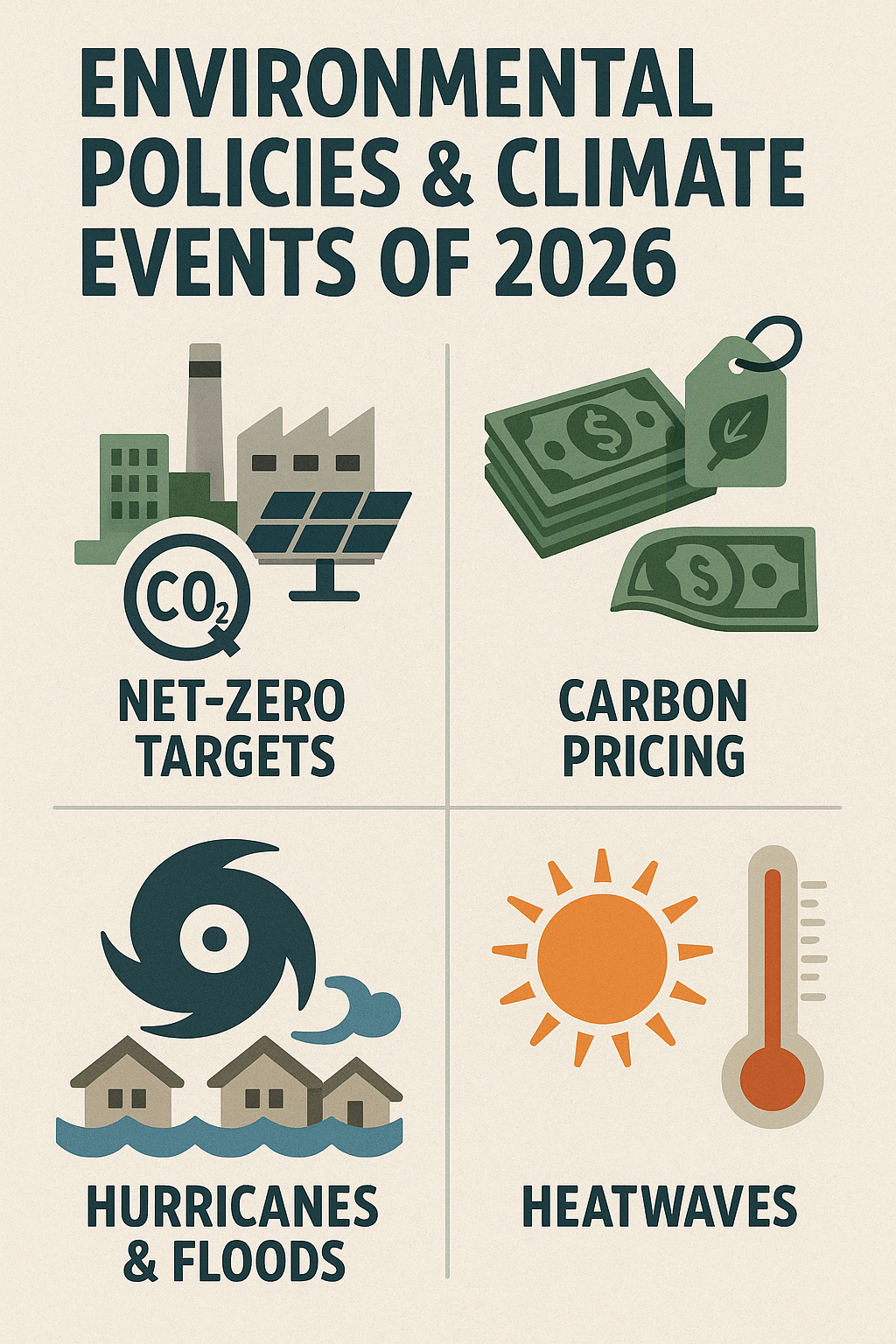
The year 2026 marked a pivotal moment in global environmental action, with governments, corporations, and international organizations implementing stronger policies to counter climate change. Growing concerns over extreme weather patterns, rising sea levels, and ongoing biodiversity loss led to significant policy shifts and record investments in sustainable technologies. These developments have accelerated the world’s transition toward cleaner energy and more resilient environmental practices.
One of the most impactful policy advancements in 2026 was the expansion of net-zero legislation. Dozens of countries introduced legally binding emissions targets, requiring industries to adopt renewable energy, reduce carbon output, and enhance reporting transparency. Stricter climate regulations encouraged corporations to invest in low-carbon operations, accelerating breakthroughs in green manufacturing, carbon capture, and sustainable transport systems. These changes marked a new era of environmental accountability across the public and private sectors.
Throughout 2026, climate events served as a stark reminder of the need for urgent action. Severe heatwaves, intensified monsoon seasons, and prolonged droughts affected millions worldwide. These events pushed nations to strengthen disaster preparedness programs while highlighting the importance of climate-resilient infrastructure. Rapid urban adaptation—such as cooling corridors, flood-resistant architecture, and expanded water conservation systems—became a critical priority for local and national governments.
Renewable energy adoption reached new global highs as wind, solar, and hydro technologies became more efficient and affordable. Government incentives and international funding programs helped accelerate renewable projects in both developed and emerging economies. Communities previously dependent on fossil fuels saw growing investment in green energy initiatives, reducing emissions and providing more stable long-term economic opportunities.
To illustrate the rapid shift toward cleaner power, the following chart shows the hypothetical growth of global renewable energy share from 2021 to 2026, highlighting the momentum achieved through strong environmental policies and rising climate awareness:
📈 Global Renewable Energy Share Growth 2021–2026 (Chart shown above)
Alongside policy changes, 2026 also saw major advancements in conservation. Reforestation programs, marine protection zones, and biodiversity restoration projects expanded significantly. AI-driven environmental monitoring helped track ecosystem health, allowing scientists to detect changes in real time and respond more effectively to environmental threats. These initiatives have contributed to the preservation of critical habitats and the recovery of endangered species.
As 2026 concludes, it is clear that environmental policies and climate events have reshaped global priorities. The momentum generated this year demonstrates a growing commitment to environmental sustainability, climate adaptation, and long-term ecological protection. With continued collaboration and innovation, the progress made in 2026 sets the foundation for an even more sustainable future in the years ahead.